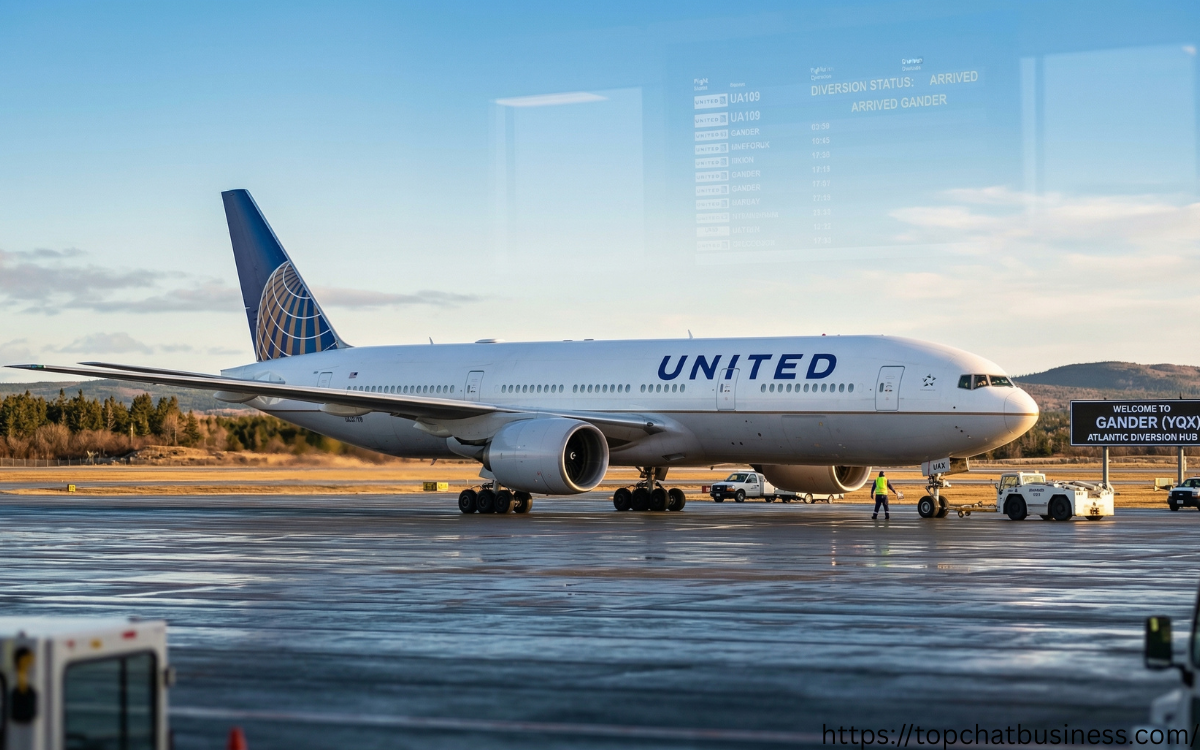
The aviation industry operates on a foundation of rigorous schedules and meticulous planning, yet the unpredictability of mechanical systems and environmental variables occasionally necessitates a deviation from the norm. One such incident that captured the attention of the traveling public and industry analysts alike was the diversion of United Airlines Flight UA109. This event serves as a profound case study in pilot decision-making, airline communication, and the complex logistics involved in rerouting a long-haul international flight.
The Flight Profile and Initial Departure
In the high-altitude environment of international travel, the cockpit is a theater of constant monitoring. Pilots are not merely steering the aircraft; they are managing sophisticated fuel systems, engine diagnostics, and environmental controls. When a diversion occurs, it is rarely the result of a single catastrophic failure, but rather a calculated response to a development that compromises the “safety margin” required for a long-distance crossing.
Identifying the Catalyst: Why Diversions Occur
The diversion of UA109 was prompted by an onboard technical irregularity. In the world of aviation, “technical issues” can range from minor sensor malfunctions to more pressing hydraulic or electrical concerns. In this specific instance, reports indicated a localized issue that, while not immediately threatening the structural integrity of the airframe, required a precautionary landing to prevent further escalation.
Diversions are classified under two main categories: medical emergencies and mechanical/operational issues. For UA109, the decision to divert was rooted in the conservative “safety-first” philosophy that defines modern commercial aviation. If an aircraft experiences a redundancy failure—meaning one of its backup systems is compromised—standard operating procedures often dictate landing at the nearest suitable airport rather than continuing across a remote area like the Atlantic or Pacific oceans, where emergency landing sites are nonexistent.
The Logistics of Rerouting
Once the Captain made the decision to divert UA109, a complex sequence of events was initiated. The crew contacted Air Traffic Control (ATC) to declare a state of urgency or a “Pan-Pan” call, which prioritizes the aircraft’s path without necessarily declaring a full-scale emergency.
Rerouting a wide-body aircraft is a logistical challenge. The pilots must calculate the “landing weight” of the aircraft. Since planes take off with thousands of pounds of fuel for long journeys, they are often too heavy to land safely immediately after takeoff. If the diversion happens early in the flight, the crew may need to perform a fuel jettison (fuel dump) or fly in circles to burn off weight to ensure the landing gear and brakes can handle the impact and deceleration on the runway.
Passenger Experience and Ground Support
For the passengers aboard United flight UA109, the announcement of a diversion is often met with a mixture of anxiety and frustration. The transition from a transcontinental journey to an unexpected stay in an unplanned city tests the resilience of an airline’s customer service infrastructure.
Upon landing at the diversion airport, United Airlines had to activate its ground handling protocols. This involves coordinating with local airport authorities for gate space, arranging for maintenance teams to inspect the aircraft, and, most importantly, managing the needs of the passengers. If the mechanical issue cannot be fixed quickly, the airline must source a replacement aircraft or arrange hotel accommodations and meals for hundreds of people. The transparency of communication during these hours is what typically determines the public perception of the airline’s brand.
This is an alternative post to this article: https://theexpensivebusiness.com/hypackel/
Safety Protocols and Regulatory Oversight
Every diversion, including that of UA109, triggers a mandatory reporting process. The Federal Aviation Administration (FAA) and the National Transportation Safety Board (NTSB) monitor these events to identify patterns. If a specific component on a Boeing or Airbus aircraft fails frequently enough to cause diversions, regulators may issue Airworthiness Directives (ADs) requiring all airlines to inspect or replace that part.
The successful landing of UA109 at its diversion point is a testament to the training of the flight crew. Modern simulators allow pilots to practice these exact scenarios—handling system failures while navigating to unfamiliar airports—hundreds of times. The goal is to make the “abnormal” feel “procedural.”
The Economic Impact of a Diversion
While safety is the primary concern, the economic ramifications of the UA109 diversion are significant. A single diversion can cost an airline hundreds of thousands of dollars. These costs include:
- Additional Fuel Consumption: Extra flying time and potential fuel dumping.
- Landing Fees: Unscheduled use of a third-party airport’s facilities.
- Crew Logistics: Pilots and flight attendants have “duty clock” limits. A diversion often causes the crew to “time out,” meaning they can no longer legally fly until they have had a mandatory rest period.
- Passenger Compensation: Rebooking fees, hotel vouchers, and vouchers for future travel.
Despite these costs, the industry remains steadfast: no amount of operational savings is worth compromising the safety of the flight.
Lessons Learned from Flight UA109
As the industry moves toward more data-driven maintenance, “predictive analytics” may soon reduce the frequency of such diversions. By monitoring engine health in real-time via satellite, airlines can sometimes identify a failing part days before it actually causes an issue, allowing them to fix the plane during scheduled downtime. Until then, the diversion of flights like UA109 remains a necessary tool in the arsenal of aviation safety.
Frequently Asked Questions (FAQs)
Q1: Was United Flight UA109 ever in immediate danger?
No. Most diversions, including UA109, are performed as a precautionary measure. Aircraft are designed with multiple redundant systems, allowing them to fly safely even if one system malfunctions.
Q2: Why didn’t the flight just continue to its original destination?
Aviation regulations and airline safety policies require a landing if the “safety margin” is reduced. If a backup system fails, the plane must land at the nearest suitable airport to ensure that if a second failure occurs, the plane is already on the ground.
Q3: Do passengers get a refund if their flight is diverted?
Airlines generally do not provide full refunds for diversions caused by mechanical issues, but they are responsible for getting passengers to their final destination. This often includes providing meals, hotel stays, and sometimes travel vouchers as a gesture of goodwill.
Q4: What happens to the luggage during a diversion?
In most cases, the luggage remains on the aircraft. If passengers are moved to a different plane, the airline handles the transfer of bags. If the flight is delayed until the next day, passengers may or may not be given access to their checked bags depending on local customs and airport security regulations.
Q5: How common are diversions in international travel?
While they seem dramatic, diversions occur daily across the global aviation network. They are a standard part of operational safety management and represent the system working as intended to prioritize passenger well-being.
