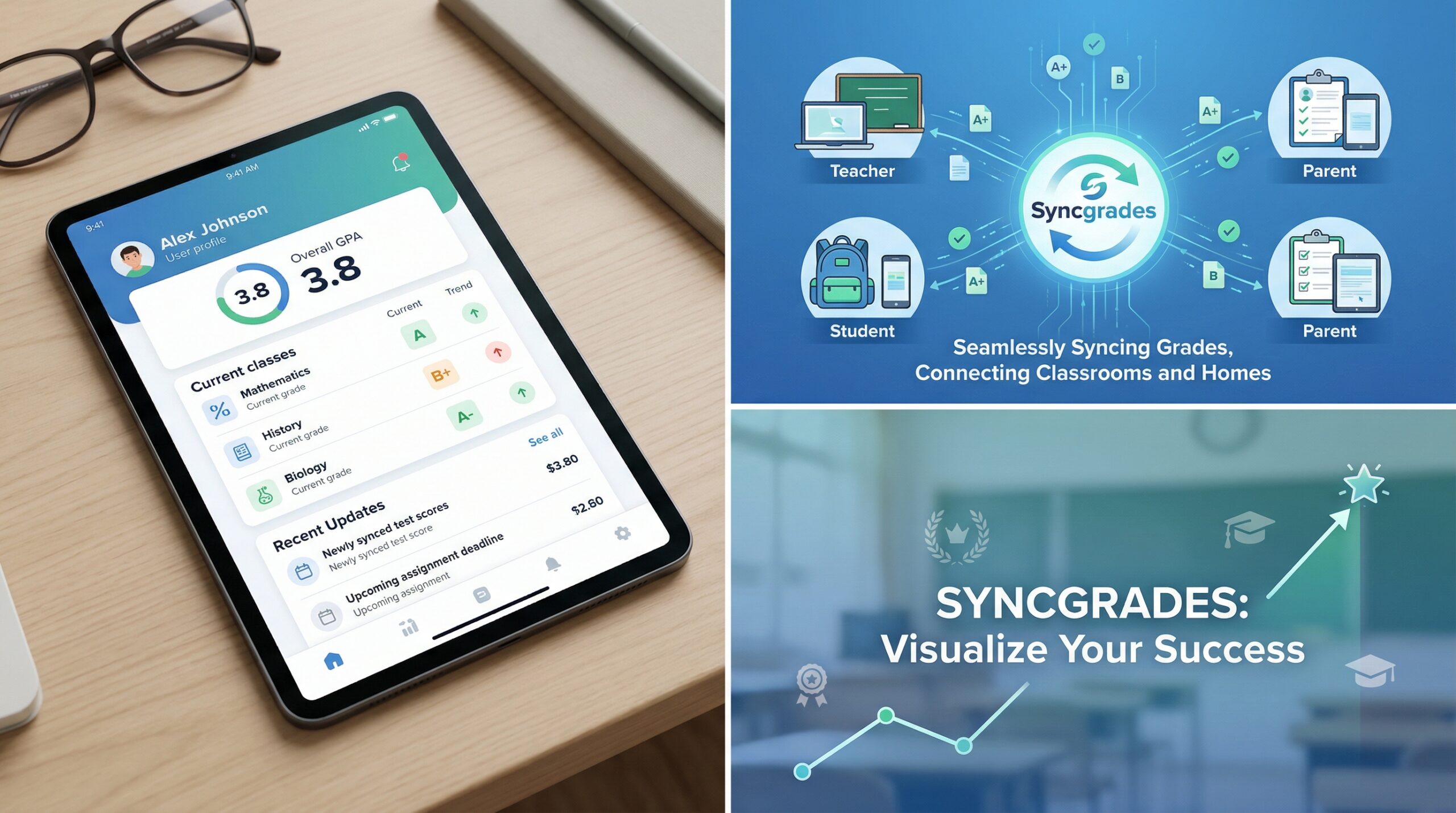
In the rapidly evolving landscape of modern education, the bridge between classroom performance and parental awareness has often been fraught with delays, manual errors, and fragmented communication. Enter SyncGrades, a robust digital ecosystem designed to unify the diverse threads of academic administration into a single, cohesive interface. As schools transition toward data-driven environments, platforms like SyncGrades have become indispensable tools for educators, students, and guardians alike. This article explores the multifaceted architecture of SyncGrades, its impact on the learning cycle, and why it represents the gold standard for contemporary school management systems.
The Genesis of Synchronized Grading
For decades, the “gradebook” was a physical ledger, a static document that only revealed its secrets during quarterly parent-teacher conferences or the arrival of a mailed report card. This latency created a “feedback gap,” in which students often realized they were struggling only after it was too late to remediate the issue. SyncGrades was developed to eliminate this lag. By moving the gradebook to a cloud-based, real-time environment, the platform ensures that every assignment, quiz, and participation mark is immediately visible to all stakeholders.
The core philosophy behind SyncGrades is transparency. When a teacher inputs a score, the data “syncs” across the entire network. This synchronization is not merely technical; it is pedagogical. It fosters an environment where students take immediate ownership of their progress, and parents can provide support at the exact moment it is needed, rather than weeks after a failed assessment.
Key Features and Functional Architecture
SyncGrades is more than just a digital spreadsheet; it is a comprehensive school information system (SIS) integrated with a learning management system (LMS). Its architecture is built on several pillars:
1. Real-Time Grade Tracking
At its heart, SyncGrades provides a dynamic dashboard that updates grades instantaneously. It supports various grading scales—from traditional letter grades to competency-based rubrics. This flexibility allows schools to customize the platform to fit their specific curricular goals.
2. Attendance and Behavioral Monitoring
Academic success is inextricably linked to presence and conduct. SyncGrades integrates attendance tracking into the daily workflow. If a student is marked absent or tardy, an automated notification can be triggered, ensuring that the school and home are in constant alignment regarding the student’s whereabouts and engagement.
3. Integrated Communication Portals
One of the primary friction points in education is the “silo” effect, where teachers and parents communicate through disparate emails, phone calls, or paper notes. SyncGrades centralizes this. Through its internal messaging system, teachers can send mass announcements or private messages regarding specific assignments. This creates a documented trail of communication that is vital for accountability.
4. Data Analytics and Reporting
For administrators, SyncGrades acts as a powerful diagnostic tool. By aggregating data across classrooms, the platform can identify broader trends. Are math scores dipping across the entire 7th grade? Is there a correlation between attendance and GPA in high school? SyncGrades provides the analytical oversight necessary to make informed institutional decisions.
Empowering the Modern Educator
The burden on teachers in the 21st century is immense. Between lesson planning, instruction, and emotional labor, the clerical task of grading can often lead to burnout. SyncGrades alleviates this pressure through automation. Features such as automated GPA calculation, weighted grading categories, and bulk-entry tools save hours of administrative work each week.
Furthermore, SyncGrades empowers teachers to provide more nuanced feedback. Instead of just a numerical score, the platform allows for detailed comments and digital rubrics. This transforms the grade from a judgment into a roadmap for improvement. When teachers are freed from the drudgery of manual data entry, they can dedicate more time to what they do best: teaching.
The Student Experience: Accountability and Growth
For students, SyncGrades serves as a mirror of their academic health. In a traditional setting, a student might feel a sense of “learned helplessness” if they don’t understand how their final grade was calculated. SyncGrades demystifies the process. Students can see exactly how much a specific project impacted their average and what they need to achieve on upcoming exams to reach their target grade.
This level of access encourages a growth mindset. It shifts the focus from “getting a grade” to “mastering a concept.” By having constant access to their standing, students learn the vital life skill of self-regulation. They become proactive participants in their education rather than passive recipients of a report card.
Read More: https://topchatbusiness.com/anxious-panda-omegle/
Strengthening the Home-School Connection
Perhaps the most significant impact of SyncGrades is on the family dynamic. Traditionally, the question “How was school today?” is often met with a one-word answer: “Fine.” With SyncGrades, parents no longer have to guess. They can check the portal and see that a science project is due Thursday or that a recent history quiz was missed.
This allows for more constructive conversations at home. Instead of reacting to a bad report card with surprise and anger, parents can intervene early with support, tutoring, or encouragement. This proactive approach reduces student anxiety and builds a collaborative relationship between the home and the school.
Security and Data Privacy
In an era of increasing digital threats, the security of student data is paramount. SyncGrades employs industry-standard encryption and adheres to strict privacy regulations, such as FERPA (Family Educational Rights and Privacy Act). The platform ensures that sensitive information is only accessible to authorized personnel, protecting the integrity and confidentiality of the student record.
Implementation and Scalability
SyncGrades is designed to be scalable, catering to small private institutions and large public school districts alike. The onboarding process typically involves migrating existing student data and training staff on the intuitive interface. Because it is a cloud-based solution, there is no need for expensive on-site servers, and updates are deployed seamlessly without disrupting the school day.
The Future of SyncGrades
As artificial intelligence and machine learning continue to permeate the educational sector, platforms like SyncGrades are poised to become even more intelligent. Future iterations may include predictive analytics that flag students at risk of failing before it happens, or personalized learning recommendations based on the specific areas where a student is struggling.
The ultimate goal of SyncGrades is to create a frictionless educational experience where information flows freely and accurately. By bridging the gap between the classroom, the administration, and the home, it ensures that no student falls through the cracks and that every educator has the tools they need to succeed.
Frequently Asked Questions (FAQs)
Q1: Is SyncGrades accessible on mobile devices?
Yes, SyncGrades is designed with a responsive interface that is accessible via smartphones, tablets, and desktop computers. Many versions also offer dedicated mobile apps for parents and students to receive push notifications for grade updates.
Q2: Can SyncGrades handle different types of grading systems, such as weighted grades?
Absolutely. The platform is highly customizable. Teachers can set up weighted categories (e.g., Exams 50%, Homework 20%, Projects 30%) and the system will automatically calculate the final averages based on those parameters.
Q3: How often is the data updated on SyncGrades?
The data is updated in real-time. As soon as a teacher saves a grade or records an attendance entry, it is immediately reflected on the student and parent portals.
Q4: What should I do if I forget my SyncGrades login information?
Users can typically reset their passwords via the “Forgot Password” link on the login page. If the issue persists, the school’s IT department or administrative office can reset credentials.
Q5: Does SyncGrades replace the need for parent-teacher conferences?
While SyncGrades provides the data that is often discussed during conferences, it does not replace the value of face-to-face communication. Instead, it makes those meetings more productive because both parties are already informed about the student’s current standing.
