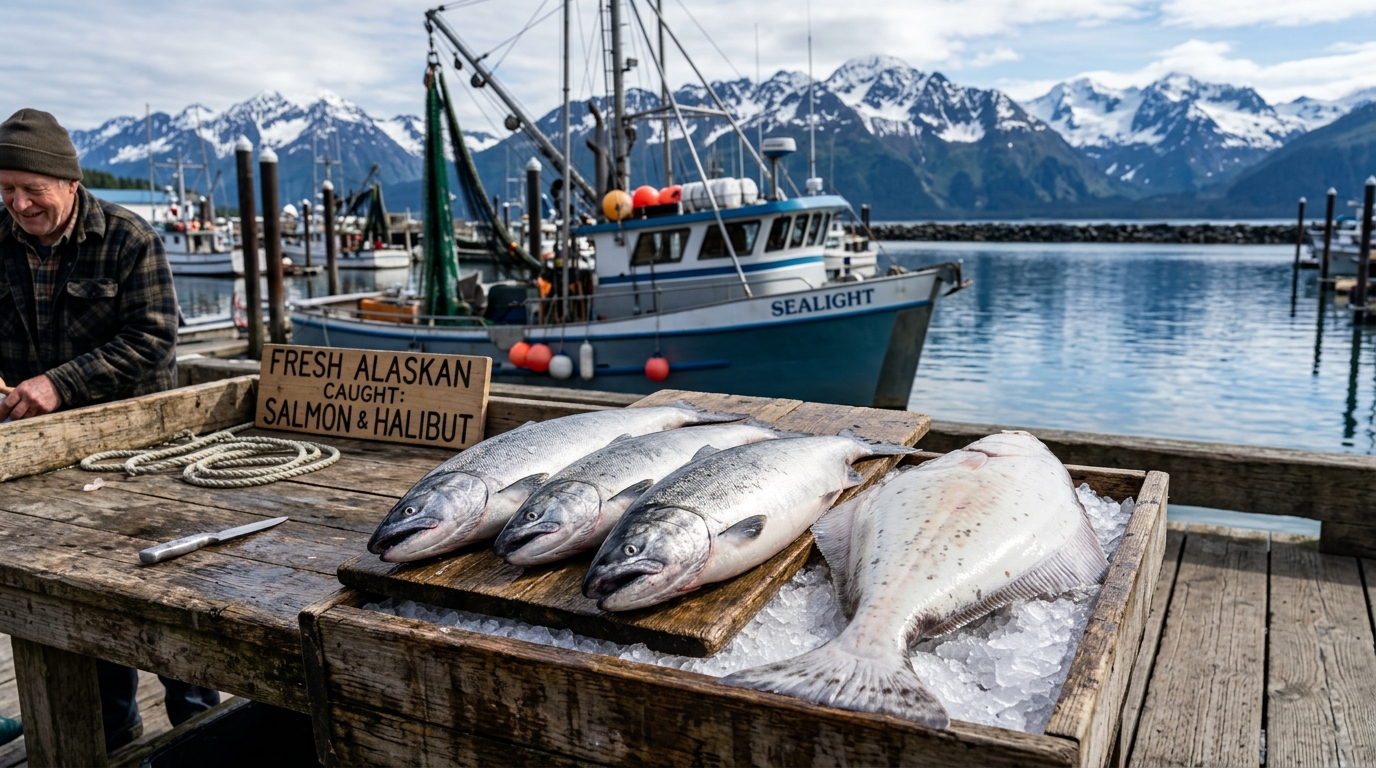
The cold, nutrient-rich waters of the North Pacific are home to one of the most commercially significant and nutritionally dense fish species in the world: the Alaskan Seiti. While many consumers may recognize it more commonly by its English name, Alaskan Pollock (Gadus chalcogrammus), the term “Seiti” (often used in Nordic or European contexts) refers to this sleek, white-fleshed member of the cod family. Despite its ubiquity in the global seafood market, the Alaskan Seiti remains an underrated hero of the ocean, offering a unique combination of sustainability, health benefits, and culinary versatility.
The Biology and Habitat of Alaskan Seiti
Alaskan Seiti is a semi-pelagic schooling fish that thrives in the icy depths of the Bering Sea and the Gulf of Alaska. Unlike its larger cousin, the Atlantic Cod, the Seiti is generally smaller, reaching maturity at around three to four years of age. They are characterized by their speckled coloration—a mix of olive green to brown on the back and silvery sides—and their prominent lateral line.
These fish are highly prolific. They migrate in massive schools, sometimes numbering in the millions, which makes them one of the most abundant fish populations on the planet. Their diet primarily consists of krill, small crustaceans, and other small fish, placing them firmly in the middle of the marine food web. Because they grow rapidly and reproduce early, they are naturally resilient to fishing pressure, provided the industry is managed with scientific oversight.
The Pillar of Sustainable Fisheries
When discussing Alaskan Seiti, the conversation must begin with sustainability. Alaska is a global leader in responsible fisheries management, enshrined in its state constitution, which mandates that all fish be utilized and maintained on the sustained yield principle.
The Alaskan Seiti fishery is one of the largest in the world, yet it is consistently cited by organizations like the Marine Stewardship Council (MSC) as a model of environmental responsibility. Several factors contribute to this reputation:
- Strict Quotas: Scientists conduct annual surveys to estimate the biomass of the Seiti population. Catch limits are set well below what the population can naturally replace.
- Low Bycatch: Because Seiti swim in massive, concentrated schools, fishers can use mid-water pelagic trawls. These nets rarely touch the ocean floor, protecting sensitive habitats, and result in remarkably low “bycatch” (the accidental capture of non-target species).
- Real-time Monitoring: Every vessel in the fleet is monitored via GPS, and most carry independent federal observers or high-definition cameras to ensure every fish caught is accounted for, and regulations are strictly followed.
Nutritional Excellence: A Powerhouse of Health
In an era where consumers are increasingly conscious of what they put into their bodies, Alaskan Seiti stands out as a “superfood” of the sea. It is a lean protein source, meaning it provides high-quality amino acids with very little fat and zero carbohydrates.
A standard serving of Alaskan Seiti is packed with:
- Omega-3 Fatty Acids: Essential for heart health and brain function, Seiti contains significant levels of DHA and EPA.
- Vitamin B12: Critical for nerve function and the production of DNA and red blood cells.
- Selenium: A powerful antioxidant that supports the immune system and thyroid function.
- Phosphorus: Vital for bone health and energy production.
Because it is harvested from the pristine, remote waters of Alaska, it also has a lower risk of mercury and other environmental contaminants compared to larger predatory fish like tuna or swordfish.
Culinary Versatility: From Surimi to Gourmet Fillets
The Alaskan Seiti is often described as the “chameleon of the kitchen.” Its mild flavor and delicate, flaky texture make it an ideal canvas for a variety of culinary applications. It does not have a “fishy” aftertaste, which makes it a favorite for children and those who may be hesitant about seafood.
Read More: https://topchatbusiness.com/jumptimer/
The Surimi Industry
Perhaps the most famous use of Alaskan Seiti is in the production of surimi—a minced fish paste used to create imitation crab, lobster, and scallops. Because of its excellent “gel” strength and neutral flavor, Seiti is the gold standard for surimi production worldwide.
Frozen Fillets and Convenience
If you have ever eaten a fish sandwich at a major global fast-food chain or purchased frozen breaded fish sticks at a grocery store, chances are you have eaten Alaskan Seiti. Its ability to hold its shape during flash-freezing and frying has made it the backbone of the global frozen seafood industry.
Fresh and Gourmet Preparations
Beyond the frozen aisle, fresh or quickly thawed Seiti fillets are excellent when pan-seared, poached, or baked. It pairs beautifully with bright, acidic flavors like lemon, capers, and white wine, or robust spices in fish tacos. Because the flesh is leaner than salmon, it cooks very quickly, making it a perfect protein for busy weeknight meals.
Economic Impact and Global Reach
The Alaskan Seiti industry is a massive economic driver. In the United States alone, it supports tens of thousands of jobs, ranging from fishermen and deckhands to processing plant workers and logistics experts. The Port of Dutch Harbor in Alaska often leads the nation in the volume of seafood landed, largely due to the sheer scale of the Seiti harvest.
Globally, the fish is exported to markets in Europe, Japan, and China. In Europe, it is often sold simply as “Seithe” or “Alaska-Seelachs,” where it is a staple in traditional fish-and-chip shops and family dinner tables alike.
The Future of Alaskan Seiti
Climate change remains the greatest challenge to the North Pacific ecosystem. As water temperatures fluctuate, the migration patterns of Seiti may shift. However, the robust scientific framework governing Alaskan waters allows managers to adapt quickly, reducing quotas if populations show signs of stress.
Furthermore, the industry is moving toward “full utilization.” This means that beyond the fillets and surimi, the bones are used for fishmeal, the skins for collagen, and the oil for Omega-3 supplements. This zero-waste approach ensures that this precious natural resource is treated with the respect it deserves.
Conclusion
Alaskan Seiti is more than just a commodity; it is a testament to what is possible when high-tech industry meets rigorous environmental stewardship. Whether you are looking for a healthy protein for your family, a sustainable choice for the planet, or a versatile ingredient for a new recipe, Alaskan Seiti delivers on all fronts. As we look toward the future of global food security, this abundant whitefish from the icy North will undoubtedly remain a cornerstone of the world’s diet.
Frequently Asked Questions (FAQs)
1. Is Alaskan Seiti the same as Alaskan Pollock?
Yes. “Seiti” (or Seithe) is a name often used in Northern Europe and the Nordic regions for the species Gadus chalcogrammus, known in North America as Alaskan Pollock.
2. Does Alaskan Seiti have a high mercury content?
No. Because Alaskan Seiti is a relatively small fish and sits lower on the food chain, it has very low levels of mercury compared to larger fish like Shark, King Mackerel, or Tuna. It is considered safe for frequent consumption, including for pregnant women and children.
3. Is it better to buy fresh or frozen Alaskan Seiti?
Most Alaskan Seiti is processed and “frozen-at-sea” (FAS) within hours of being caught. This locks in freshness and nutrients. Unless you live near a processing hub in Alaska, “fresh” fillets in stores are often thawed FAS fillets, which are of excellent quality.
4. How does the taste of Seiti compare to that of Cod?
Seiti is very similar to Atlantic Cod but has a slightly milder flavor and a somewhat smaller, more delicate flake. It is generally more affordable than Cod, making it an excellent alternative for most recipes.
5. Is Alaskan Seiti environmentally friendly?
Yes. The Alaskan Seiti fishery is certified by the Marine Stewardship Council (MSC) and is considered one of the most well-managed and sustainable large-scale fisheries in the world.
