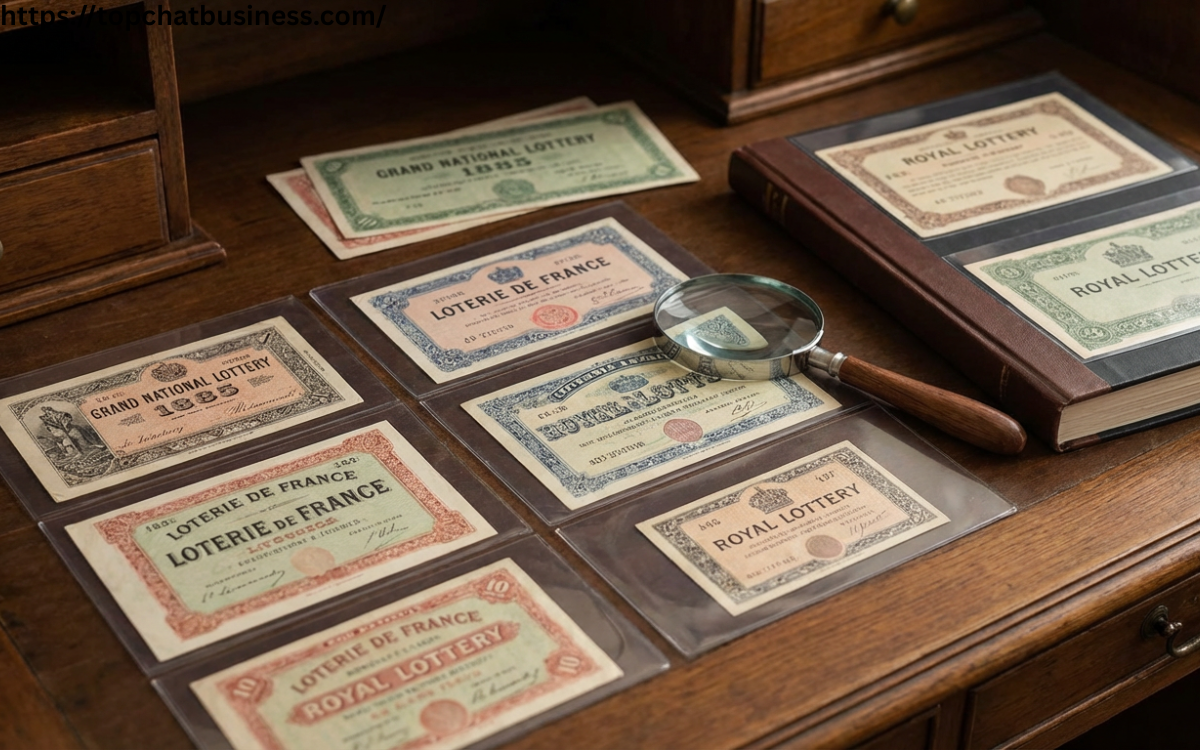
The concept of “winning big” is a universal human fantasy, a dream that transcends borders, cultures, and socioeconomic status. While most people view the lottery simply as a weekly ritual or a harmless flutter, there exists a specialized field dedicated to its study: Lotology. Lotology is the comprehensive examination of lotteries, encompassing their historical evolution, the complex mathematics of probability, the psychological drivers of play, and the broader socioeconomic impacts of state-sponsored gambling.
The Historical Foundations of Lotology
To understand lotology, one must first trace the lineage of the lottery itself. The word “lottery” likely derives from the Dutch word lot, meaning fate. However, the practice of using random draws to distribute goods or fund public projects dates back thousands of years.
Historical records suggest that the first recorded signs of a lottery are Keno slips from the Chinese Han Dynasty between 205 and 187 BC. These lotteries are believed to have helped finance major government works, including the Great Wall of China. In the West, the Roman Empire utilized lotteries as a form of entertainment at dinner parties, where every guest would receive a prize, often consisting of luxury items like dinnerware.
By the 15th century, lotteries took on a more civic purpose in Europe. Towns in Flanders and the Netherlands held public lotteries to raise money for fortifications, hospitals, and the poor. The first official English state lottery was chartered by Queen Elizabeth I in 1566. This transition from private amusement to public revenue generator is a cornerstone of lotological research, as it explains how modern governments became the primary purveyors of chance.
The Mathematics of Chance: Probability and Odds
A significant portion of lotology is dedicated to the cold, hard numbers. Mathematicians study lotteries to illustrate the laws of probability and the “law of large numbers.” In a standard 6/49 lottery, for instance, the odds of winning the jackpot are approximately 1 in 13.98 million.
Lotologists often analyze these figures to debunk common myths, such as the “gambler’s fallacy”—the belief that if a certain number hasn’t been drawn in a while, it is “due” to appear. In reality, every draw is an independent event; the balls have no memory. Lotology also examines the concept of “Expected Value” (EV). In most commercial lotteries, the EV is negative, meaning that for every dollar spent, the player can expect to lose a certain percentage over time. This mathematical reality is what allows lotteries to function as a reliable source of revenue for the state, often referred to as a “voluntary tax.”
The Psychology of the Player
If the odds are so overwhelmingly against the player, why do billions of people continue to play? This is the psychological frontier of lotology. Researchers have identified several cognitive biases that drive lottery participation:
- Availability Heuristic: People see news reports of lottery winners but rarely of the millions who lose. This creates a distorted perception that winning is more common than it actually is.
- Near-Miss Effect: When a player gets three out of six numbers, the brain processes this as a “near win” rather than a total loss. This triggers a dopamine response, encouraging the player to try again.
- Control Over Randomness: Many players believe that choosing their own “lucky numbers” (birthdays, anniversaries) gives them a better chance of winning, despite the mathematical certainty that every combination is equally likely.
Lotology seeks to understand the “dream utility” of the lottery. For many, the value of a ticket isn’t the statistical probability of the jackpot; it is the license to fantasize about a different life between the time of purchase and the drawing.
Read More: https://topchatbusiness.com/query73/
Socioeconomic Impact and Ethical Considerations
Perhaps the most contentious area of lotology is the study of who plays and how it affects society. Data consistently show that individuals in lower-income brackets spend a higher percentage of their earnings on lottery tickets than those in higher-income brackets. This has led many sociologists to argue that lotteries are a regressive form of taxation.
On the flip side, lotology also examines the “Good Causes” funded by lottery proceeds. In many jurisdictions, lottery revenue is earmarked for education, veterans’ affairs, environmental conservation, and the arts. The ethical dilemma at the heart of lotology is whether the public benefits of these funds outweigh the potential harm caused to vulnerable populations prone to gambling addiction.
The Modern Evolution: Digital Lotteries and Global Trends
In the 21st century, lotology has expanded to include the digital landscape. Online lottery platforms and mobile apps have revolutionized how people play, making it easier than ever to participate in international draws. This shift has introduced new challenges for lotologists, including concerns over cybersecurity, the increased speed of play (which can exacerbate addiction), and the globalization of the lottery market.
Furthermore, the rise of “scratch-off” tickets has changed the temporal nature of the lottery. Unlike traditional draws that happen once or twice a week, scratch-offs provide “instant gratification,” which alters the psychological profile of the consumer and the frequency of play.
The Cultural Significance of the Jackpot
Beyond the numbers and the ethics, lotology acknowledges the lottery as a cultural phenomenon. It appears in literature (such as Shirley Jackson’s The Lottery or George Orwell’s 1984), in films, and in the daily conversations of office workers. It represents the “American Dream” (and its international equivalents) in its most distilled form: the idea that anyone, regardless of background, can achieve ultimate wealth through a single stroke of luck.
Conclusion
Lotology is more than just the study of a game; it is a window into human nature. By examining the history, math, and psychology of the lottery, we gain a deeper understanding of how we handle risk, how we value hope, and how society balances the need for revenue with the responsibility of protecting its citizens. Whether viewed as a mathematical curiosity or a social necessity, the lottery remains one of the most enduring and fascinating institutions in human history.
Frequently Asked Questions (FAQs)
Q1: What exactly does a “Lotologist” do?
A lotologist may be a mathematician, a historian, or a sociologist. They study the trends, mechanics, and societal impacts of lotteries. Some lotologists also focus on the hobby of collecting lottery tickets (similar to philately for stamps).
Q2: Are lottery numbers truly random?
Yes. Modern lotteries use either mechanical gravity-pick machines or certified Random Number Generators (RNGs) to ensure that every possible combination has an equal chance of being selected.
Q3: Does buying more tickets actually improve my odds?
Mathematically, yes. If you buy two tickets in a 1-in-14-million draw, your odds become 2-in-14-million. However, in practical terms, the increase is so negligible that it does not significantly change your likelihood of winning.
Q4: What is “Lotto Fever”?
This is a term used by lotologists to describe the social phenomenon where a massive jackpot (often exceeding hundreds of millions of dollars) causes people who do not normally play the lottery to begin buying tickets in bulk, driven by fear of missing out and heightened media coverage.
Q5: Is it better to pick my own numbers or use a “Quick Pick”?
From a probability standpoint, it makes no difference. However, lotologists note that “Quick Pick” numbers are less likely to be shared with other players. Many people choose numbers based on dates (1-31), which means if those numbers win, you are more likely to have to split the jackpot with others who chose the same common numbers.
